
The history of ILGA: 1978/2012
A research by David Paternotte (Fonds national de la Recherche scientifique/Université libre de Bruxelles, Belgium), Alex Cosials Apellaniz (Universitat de Barcelona, Spain), and David Tong (Alliàge, Belgium)
for the period between 1978 and 2007. Amendments by Nigel Warner and Stephen Barris for the period 2005 – 2012. Edits by Daniele Paletta (2026).
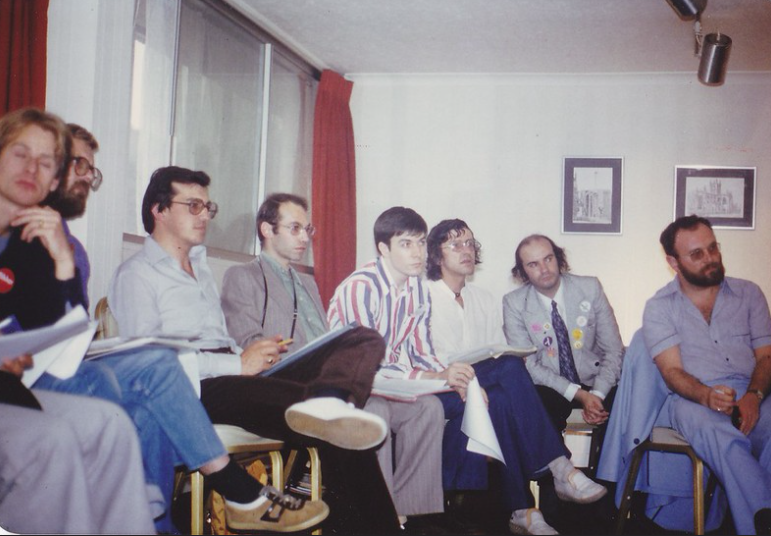
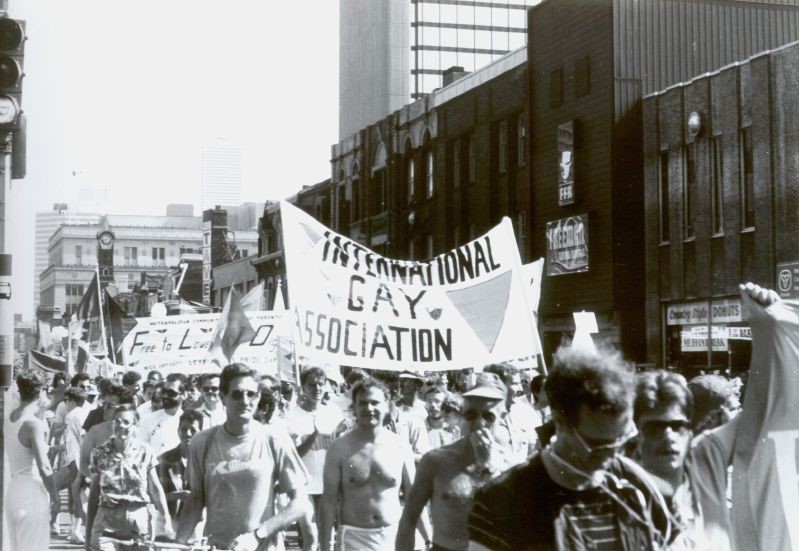
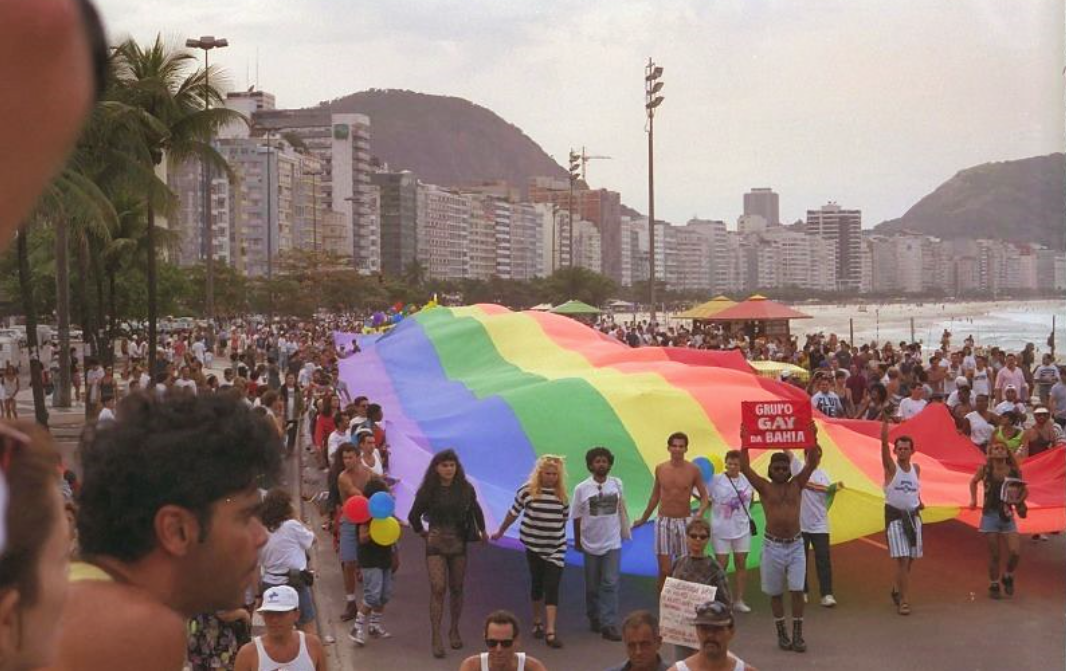
All photos from these page belong to the ILGA & ILIS History Collection at the Bishopsgate Institute.
The 1970s
1978
Founded in Coventry (United Kingdom) at a fringe meeting at the annual conference of the Campaign for Homosexual Equality, by representatives of organisations from Australia (Gay Liberation Sydney/Victorian Homosexual Law Reform Coalition, Britain (CHE), Denmark (LBL F-48), France (CIDH), Northern Ireland (NIGRA), Republic of Ireland (National Gay Federation), Italy (FOURI!), the Netherlands (COC), Scotland (SHRG) and the United States (NGTF). Rob Pistor (COC) and Peter Ashman (CHE) chaired the meeting.
The aims were declared as:
- to maximise the effectiveness of gay organisations by coordinating political action on an international level in pursuit of gay rights and in particular to apply concerted political pressure on governments and international institutions
- to set up an information centre to distribute information on gay matters between gay organisations to promote a wider knowledge of gay oppression and identify areas where international political pressure
The inaugural press release stated that matters of immediate concern were the proposed anti-homosexual laws in Greece and existing anti-homosexual laws in the Soviet Union. It also announced that there would be submissions to the Council of Europe on decriminalisation, and on amending the European Convention on Human Rights to provide protection from discrimination on the ground of sexual orientation.
Particular attention would be paid to cases brought under the Convention by Jeff Dudgeon of NIGRA against the UK government and by David Norris against the Republic of Ireland, while Amnesty International would be encouraged to work for the release of people imprisoned under anti-homosexual laws.
The Association was to be coordinated initially from an information centre based at Dublin’s Hirschfeld Centre, with a financial centre in Amsterdam.
The Coventry meeting had originally been called to establish a European organisation. However, delegates from Australia and the USA argued persuasively for establishing a global organisation.
No women were present at the Coventry meeting. It was agreed not to take a decision on the use of the word “lesbian” in the name of the organisation until women were involved.
1979
25 March: Enzo Francone of FUORI! demonstrates on behalf of the IGA in Tehran against the persecution of gay people.
13 – 16 April: 1st IGA World Conference in Bergen (the Netherlands). The 65 delegates from 17 countries and three continents receive an official welcome at Amsterdam town hall.
- Recognising the under-representation of women, the organisation adopts gender parity as an ultimate goal to work towards.
- In the absence of any organisations from Global South countries, members were to collect information about the position in these countries and to open dialogue with liberation groups
- Among other issues which member organisations agreed to work on were pressurising governments to grant political asylum, collecting information about the situation of trans people, campaigning for a change in the World Health Organisation’s classification of homosexuality as a disease, the immigration problems of bi-national same-sex partners, applications for consultative status at the United Nations and Council of Europe, seeking support from the World Council of Churches and the International Labour Organisation, and lobbying candidates in the election to the European Parliament.
- June 28 was designated “International Gay Solidarity Day”.
24 – 27 August: Informal Workshop in Brighton (United Kingdom), hosted by the Campaign for Homosexual Equality.
- Greater involvement of women, with a working paper to be prepared for Barcelona and consideration of a name change
- FUORI! plans a demonstration for the Moscow Olympics
The 1980s
1980
4 – 7 April: 2nd IGA World Conference at Santa Cristina d’Aro (northeast of Barcelona [it was always known as the Barcelona conference], Spain), hosted by Grup en Lluita per l’Alliberament de la Lesbiana (GLAL) and Front d’Alliberament Gai de Catalunya (FAGC).
- Greater involvement of women (45 of the 170 participants), and establishment of the women’s secretariat, the International Lesbian Information Service (ILIS), at COC, was agreed.
- A women’s caucus meeting rejected the idea of the organisation’s name being “International Lesbian and Gay Association”, on the grounds that it suggested an artificial division between being a woman and being gay, and stressed a split between women and men. Instead, the caucus proposed adding a subtitle to the existing name — “International Association of Gay Women and Men” — a proposal the Plenary Session accepted
- Work on numerous political actions continued, including United Nations consultative status, deletion of homosexuality from the WHO classification of diseases, Amnesty International, the NIGRA (Dudgeon) ECHR case, refusal of the Spanish Government to give legal recognition to FAGC, the illegality of homosexuality in Cyprus, and Ireland, and homophobic actions in Cuba.
21 July: During the Moscow Olympics, Enzo Francone (FUORI!) attempts to chain himself to the railings in front of the Kremlin in Red Square, in protest against Article 121 of the Russian penal code, and for the release of two imprisoned gay men, Piatkus and Trifinov. He is beaten by the police.
8 – 10 August: 1st IGA Summer Meeting in Ghent (Belgium), hosted by Federatie Werkgroepen Homofilië. Much work on organisational development and progressing specific actions
27 December – 1 January – ILIS Conference in Amsterdam, hosted by COC, with 76 participants from 17 countries.
Numerous issues addressed, including child custody, lesbian mothers, female sexuality, lesbians and the media, and the working of ILIS, which would have autonomy in decision-making concerning lesbian issues, but would have an important link with the IGA in matters concerning both sexes.
1981
19 – 21 April: 3rd IGA World Conference in Turin/Torre Pellice (Italy), hosted by FUORI!
- IGA’s first Constitution intensively debated and adopted
- A conference of ILIS immediately preceding the IGA conference decides that ILIS would be an autonomous organisation, without formal links to the IGA.
- East Europe Information Pool established at HOSI-Wien; plans developed for a resolution at the 75th anniversary celebrations of the International Union of Socialist Youth
Continuing work on UN Consultative Status, World Health Organisation, the NIGRA and Norris cases, Cyprus, the Body Politics (Canada), Cuba, a Finnish case at the UN Human Rights Committee, gays in the Third World, and much else
21 – 23 August: 2nd IGA European (Summer) Meeting in Stockholm (Sweden), hosted by Riksförbundet för sexuellt likaberättigande (RFSL).
1 October: The Parliamentary Assembly of the Council of Europe calls for the decriminalisation of homosexuality, an equal age of consent, and for equality in employment and custody rights. IGA members had lobbied the Rapporteur.
21 October: In the first positive ruling on LGBT rights by any international human rights tribunal, the European Court of Human Rights ruled in the NIGRA case that the criminalisation of homosexual acts between consenting adults was a violation of human rights. The plaintiff, Jeff Dudgeon, and the lawyer who played a leading role in preparing the case for the Court, Peter Ashman, were both instrumental in founding the IGA.
1982
IGA information secretariat moved from NGF Dublin (Ireland) to RFSL Stockholm (Sweden). Draft of the IGA Action Guidelines.
8 – 11 April: 3rd IGA European Meeting in Strasbourg (France), hosted by Gay Pied. The conference is held in tents, after the Catholic Church withdraws the use of a youth hostel originally booked at the last minute
12 – 17 July: 4th IGA World Conference in Washington (United States).
Homosexual Prisoners’ Agency set up to work on those imprisoned on account of their sexual orientation. Latin American Information Pool set up in Surinam.
28 -31 December: 4th IGA European Meeting in Edinburgh (United Kingdom), hosted by the Scottish Homosexual Rights Group (SHRG).
1983
– 11 – 16 July: 5th IGA World Conference in Vienna (Austria), hosted by Homosexuelle Initiative (HOSI) Wien.
– Grupo Gai da Bahia (Brazil) takes over Latin American Information Pool
– 28 – 31 December: 5th IGA European Conference in Cologne (Germany), hosted by the gay liberation front (GLF) Köln.
1984
International Year of Lesbian and Gay Actions.
20 – 22 January: European AIDS Conference in Amsterdam (the Netherlands).
13 March 1984: European Parliament adopts its first statement in support of LGBT rights, the Squarcialupi report. It called on the Commission to ensure that “no cases arise in the Member States of discrimination against homosexuals with regard to access to employment and dismissals”. IGA members had provided information to Ms Squarcialupi and lobbied MEPs.
9 – 14 July: 6th IGA World Conference in Helsinki (Finland), hosted by Seksuaalinen Tasavertaisuus (SETA)
- 70 delegates from 18 countries
- UN Consultative status application abandoned as time not ripe and IGA does not have necessary structure
- Members to lobby their national delegations to put lesbian issues on the agenda of the UN Women’s Conference in 1985, Nairobi
- Support for the organisers of the New York march on the UN
- First groups join from East Europe (Russia) and Africa (South Africa)
- Public protest at Finnish tourist office over refusal of authorities to support conference
30 September: March on the United Nations in New York (United States).
- Organised by the Lesbian and Gay Organization (LGOC)
- More than 1000 lesbians and gay men, from Canada (Toronto and Québec), Mexico, Argentina, the Netherlands, Puerto Rico, Ireland.
- The claims are: an end to violence against LGB, declassification of homosexuality as a disease by the World Health Organization, and to anti-gay immigration laws, and civil and human rights worldwide.
- On 29 September, the LGOC organised a conference “On the Global Movement for Lesbian and Gay Liberation”.
26 December – 1 January: 6th IGA European Conference in Bologna (Italy), hosted by Circulo Culturale 28 Giugno.
1985
1st ILGA Pink Book published with the help of a grant from the Dutch government
30 June – 7 July: 7th IGA World Conference in Toronto (Canada)
- 500 delegates from 18 nations.
- Theme: “Smashing Borders and Opening Spaces: General Oppression of Gay and Lesbian People”
- Gay Asians Toronto set up an Asian Information Pool
- First resolution on HIV/AIDS
8 – 17 July: World Women’s Conference in Nairobi (Kenya).
- IGA participates in the NGO forum (through COC).
27 December – 1 January 1986: 7th IGA European Conference in Cabrera de Mar (Barcelona, Spain), hosted by the Front d’Alliberament Gai de Catalunya (FAGC)
- 60 delegates from 15 European countries
- Several protests over causes of anti-gay and lesbian discrimination
- Demonstration in Barcelona on 1 January
- Issues under discussion: North-South cooperation, AIDS, education in Eastern Europe, lesbians and gays in the military, homosexuality and the Christian Church.
1986
30 April – 3 May: First IGA Asian Conference in Tokyo (Japan).
- Hosted by the Japanese IGA Support Group
- Theme: “We are everywhere”
7 – 12 July: 8th IGA World Conference in Isterød near Copenhagen (Denmark), hosted by Forbundet af 1948/Landsforening for bøsser og lesbiske (F-48/LBL).
- Theme: “Lesbian and Gays Facing Crisis”
- Important organisational changes included the creation of the post of joint Secretary-General, and the change of name to include the word lesbian.
- The Women’s Secretariat moves to Groep 7152 (Netherlands)
- Letters and petition of support for Simon Nkoli and the Vaal 22 (South Africa)
- Further lobbying of Amnesty International
28 December – 1 January 1987: 8th ILGA European Conference in Brussels (Belgium), hosted by Antenne Rose and Homo Centrum Bruxelles.
- The 1987 European Homophobe of the Year Award is granted to Pope John Paul II of the Roman Catholic Church.
1987
January: Financial Secretariat moves to London (ILGA London Support Group)
5 – 6 March: European Conference in Brussels (Belgium).
- 102 participants from 10 countries.
- Hearing on discrimination against homosexuality at the European Parliament.
29 June – 5 July: 9th ILGA World Conference in Cologne (Germany), hosted by the Gay Liberation Front (GLF).
- 100 organisations from more than 30 countries
- Progress in convincing Amnesty International to reverse its refusal to adopt homosexuals arrested for their sexual orientation
- Progress in convincing WHO to drop its classification of homosexuality as a disease
- Project of publishing the 2nd ILGA Pink Book
6 – 8 November: Sub-regional Meeting for Eastern and South-Eastern Europe in Budapest (Hungary), hosted by an informal group of Hungarian activists with the support of HOSI Wien, Vienna (Austria).
- 30 gay and lesbian delegates
- Themes: information on the legal and social situation of lesbian and gay people in Czechoslovakia, the German Democratic Republic, Hungary, Poland, Romania, and Yugoslavia. AIDS prevention and testing. Coordination of efforts amongst lesbian and gay groups in Eastern and South-Eastern Europe.
10 – 12 December “Homosexuality beyond Disease” conference in Amsterdam – organised by COC, Homostudies Utrecht and ILGA, and aimed at putting pressure on the WHO
28 – 31 December: 9th ILGA European Conference in Zürich (Switzerland)
- 55 delegates from 13 countries.
1988
- Publication of the 2nd ILGA Pink Book.
- International campaign against Clause 28 (which banned UK local authorities from “promoting” homosexuality)
- ILGA videofilm: “We are everywhere”
- The first Latin American Lesbian Conference is held in Mexico City (Mexico)
- ILGA rejects the UN report “Calls for further work on sexual minorities” because of clichés and factual inaccuracies about homosexuality.
16 – 17 April: 2nd (ILGA) Sub-regional Meeting for Eastern and South-Eastern Europe, Warsaw (Poland), hosted by Warszawski Ruch Homoseksualny (WRH).
26 June – 2 July: 10th ILGA World Conference in Oslo (Norway), hosted by Det Norske Forbundet af 1948 (DnF-48) and Arbeidsgrupper for homofil og lesbisk frigjøring (AHF)
- More than 100 delegates, from 45 organisations and 21 countries
- Theme: combating discrimination
- Establishment of an international committee to submit an application for UN consultative status
- Approval of a proposed draft protocol to the European Convention on Human Rights which would ban discrimination on the ground of sexual orientation
- Claims against Amnesty International’s refusal to adopt homosexual prisoners because they’re gay
- Beginning of the ILGA/Homostudies Iceberg project, documenting discrimination against homosexuals in Europe
26 October: David Norris wins his case at the European Court of Human Rights against the ban on sex between men in Ireland, consolidating the 1981 Dudgeon victory.
19 – 20 November: 2nd ILGA Asian Conference in Tokyo (Japan), with a report on gay organisations in Indonesia.
1 December: First World AIDS Day.
27 – 31 December: 10th ILGA European Conference in Amsterdam (the Netherlands), hosted by COC.
- Theme: “1992: What consequences will the European Integration in 1992 have for the national policy of lesbian and gay organisations?”
- 102 delegates and 31 organisations from 15 countries
- Preparation of the 1989 European elections.
1989
Two new cities apply for ILGA membership: Rotterdam and Nijmegen (the Netherlands). The Hague (the Netherlands) was the first one, some years before.
21 – 23 April: 3rd ILGA Sub-regional Meeting for Eastern and South-Eastern Europe in Budapest (Hungary), hosted by Homeros Lambda.
May: the Danish Parliament approves the first registered partnership for lesbians and gays worldwide.
4th July: ILGA applies for Consultative Status at the Council of Europe. However, the application is rejected (nearly a year later) on the grounds that ILGA’s activities “are not directly related to the present work programme of the Council of Europe”
16 – 22 July: 11th ILGA World Conference in Vienna (Austria), hosted by HOSI Wien. There are 262 participants from 33 countries
- Visit to the extermination camp of Mauthausen and tribute to the homosexual victims of nazism
- Simon Nkoli, finally released from detention in South Africa, addressed the Conference, thanking ILGA for the letters of support and explaining their importance to him and the Vaal 22.
27 – 31 December: 11th European Regional Conference in Athens (Greece).
- Organised by EOK
- 66 delegates from 17 countries
- Meeting between European members of the ILGA and Amnesty International members
- Melina Mercouri, former Greek Minister of Culture, sends a warm message of support: “Make love in all its variations into a God”.
The 1990s
1990
The Women’s Secretariat tours American lesbian communities to introduce ILGA and to start building a support network in North America.
28 February: Jean-Claude Letist dies in Cologne (Germany).
20 – 22 April: 4th ILGA Sub-Regional Conference for Eastern and South Eastern Europe in Leipzig (Germany)
- About 30 persons from Poland, the GDR, Yugoslavia, Czechoslovakia and the USSR, and 20 guests from the West
- The conference is reported in the GDR press.
17 May: the General Assembly of the World Health Organization removes homosexuality from its list of mental disorders.
25 – 27 May: ILGA organises a human rights seminar (hosted by F-48/LBL) as a parallel activity to the CSCE “human dimension” conference in Copenhagen (Denmark)
1 – 7 July: 12th International ILGA Conference in Stockholm (Sweden)
- Hosted by RFSL
- 287 participants from 116 different groups and 36 nations.
- The East Europe Information Pool is closed, as it was no longer needed
- Revisions to the Constitution empower the Secretariat’s Committee to enact policy and decisions, moving ILGA further along the path from being an informal network to a professionally run NGO. The associated move of the Information Secretariat to Brussels is accompanied by the employment of ILGA’s first staff member, albeit part-time.
24 – 26 August: 3rd ILGA Asian Conference, Bangkok (Thailand).
September: the ILGA Lesbian Working Group for Lesbian Visibility plans the first annual Lesbian Week in New York (United States of America).
20th December: ILGA representatives meet with the European Commissioner for Social Affairs, Vaso Papandreou, in Brussels (Belgium).
- The Commission agrees to fund a study and report on “the rights of lesbians and gay men in the legal order of the European Commission”.
ILGA, the Stonewall Group, and the European Human Rights Foundation undertake the study.
27th – 31st December: 12th European Regional Conference at Copenhagen (Denmark), hosted by F-48/LBL.
1991
After years of campaigning, ILGA and other organisations convince Amnesty International to accept lesbians and gay men imprisoned for their sexuality as “prisoners of conscience” during its assembly in Yokohama (Japan).
January: Co-Secretary General Lisa Power raises homosexuality – the first time an out person does so at the United Nations in New York – as part of an ILGA delegation to the ECOSOC NGO Committee regarding ILGA’s membership application.
19 – 21 April: ILGA Regional Conference for Eastern and South Eastern Europe in Prague (Czechoslovakia), hosted by Svaz Lambda.
- Theme: “Lesbian and Gay Media: Theory and Practice”
- Participants from Czechoslovakia, Poland, Hungary, Yugoslavia, GDR, USSR and Bulgaria (for the first time).
28 – 29 June: 1st ILGA Regional Latin American Conference, followed by the 13th ILGA World Conference, 30 June – 6 July. Originally scheduled for Guadalajara, both conferences were moved to Acapulco after threats of violence and the Governor of Guadalajara’s refusal to guarantee participants’ safety.
14 September: The City of Amsterdam (the Netherlands) applies for associate membership.
27 – 31 December: 13th ILGA European Regional Conference in Berlin (Germany), hosted by the Sonntags-Club.
1992
1 – 3 May: 6th ILGA Regional Conference for Eastern and South-Eastern Europe, in Bratislava (Czechoslovakia), hosted by Ganymedes.
12 – 18 July: 14th ILGA World Conference in Paris (France).
- Organised by “Gais pour les Libertés”
- 254 delegates from all 5 continents. For the first time, participants from India, Zimbabwe, Malaysia and Kenya
- 16 July: a day of demonstrations
- marking the 50th anniversary of deportations by the nazis by renaming the rue Alexis Carrel rue du Triangle Rose
- in front of the Iranian embassy in protest of the death penalty against homosexual acts in that country.
- in front of the Mexican Embassy in protest at the murder of 7 gay men, including the head of the Confederation of Mexicans against AIDS. The demonstration is repressed by the police, and 9 ILGA delegates are injured
- ILGA decides it should begin a process of regionalisation, working towards the creation of regional structures and committees.
6 August: Speech by Prof. Douglas Sanders on behalf of ILGA in the name of Human Rights Advocates in the Sub-Commission on Prevention of Discrimination and Protection of Minorities, raising homosexuality for the first time in a UN rights forum.
2 – 4 October: 4th ILGA Asian Regional Conference in Manila (Philippines).
16 – 18 October: ILGA EC Strategy Planning meeting in Sitges (Spain), organised by Coordinadora Gai-Lesbiana de Catalunya (CGL).
27 – 31 December: 14th ILGA European Regional Conference in Brussels (Belgium), hosted by Antenne Rose and FWH.
1993
Publication of 3rd Pink Book.
28 – 30 January: ILGA is invited to participate in the inter-regional meeting “Human Rights at the Dawn of the 21st Century”, organised by the Council of Europe in Strasbourg, in the context of preparing the World Conference on Human Rights, which is held in Vienna in June 1993.
23 March: ILGA Bid for NGO status with ECOSOC discussed by the United Nations in New York (United States).
- The UN Committee on NGO of ECOSOC recommends ILGA for Consultative Status on the roster.
15 – 18 April: 7th ILGA Sub-regional Conference for Eastern and South-Eastern Europe in Vienna (Austria), hosted by HOSI Wien.
- Main theme: HIV/AIDS
- 218 participants from 27 countries, including 15 countries from Central and Eastern Europe.
22 April 1993: ILGA activist Alecos Modinos wins his case at the European Court of Human Rights against the ban on sex between men in Cyprus, consolidating the Dudgeon and Norris rulings.
10 – 12 June: ILGA participates in the NGO Conference on Human Rights in Vienna (Austria).
16 June: HOSI-Wien organises an ILGA parallel activity: “Lesbian and Gay Rights are Human Rights”.
14 – 25 June: UN World Conference on Human Rights in Vienna (Austria).
July: ILGA gains consultative status at the United Nations.
11 – 17 July: 15th World ILGA Conference in Barcelona (Spain)
- Hosted by the Coordinadora Gai-Lesbiana
- Demonstration against repression of homosexuality in Turkey in front of the Turkish commercial delegation, and against homophobic crimes at the Columbus Column, in Barcelona harbour
- The Barcelona City Council and the Catalan Governement welcome the conference
September: the US right publicised that the NAMBLA (North American Man Boy Love Association) is a member of ILGA
- The governments of the US, Canada and Australia state publicly that they cannot support ILGA’s consultative status as long as pro-paedophile organisations remain members.
27 – 31 December: 15th ILGA European Conference in London (United Kingdom), hosted by the London Lesbian and Gay Switchboard.
1994
Board Meeting in Mexico.
8 February: the European Parliament approves the Roth Report, which urges the Member States, among others, to equalise the legal age of consent between hetero and homosexuals, to grant equal rights to same-sex couples, including the opening-up of same-sex marriage, and to allow homosexuals to adopt children.
31 March 1994: Nick Toonen of ILGA member organisation Tasmanian Gay & Lesbian Rights Group wins his challenge before the UN Human Rights Committee under the International Covenant on Civil and Political Rights against the ban on sexual relationships between men, thus establishing at global level the human rights principle already recognised in Europe through the Dudgeon, Norris, and Modinos cases.
22 – 24 April: 8th ILGA Sub-regional Conference for Eastern and South-Eastern Europe in Palanga (Lithuania), hosted by Lietuvos judėjimas už seksualinę lygybę (Lithuanian Movement for Sexual Equality), Amsterdamas Club and Diplomata.
- Theme: “Against AIDS and discrimination”.
24 June – 3 July: 16th Annual Conference in New York (United States). Hosted by the Centre ILGA Committee, a program of the Lesbian and Gay Community Services Centre.
- ILGA clearly condemns paedophilia, and pro-paedophilia members of the ILGA are expelled by a motion which is approved by 88% of the members.
27 June 27: ILGA co-hosts the Stonewall 25 commemoration events in New York City
September: The USA learns that the Munich-based group VSG hosts meetings supportive of paedophilia. ILGA expels the VSG
- US Republican Senator Jesse Helms denounces the situation
- The ECOSOC suspends ILGA’s consultative status, without revoking it.
21 – 23 October: ILGA Euro Seminar in Sitges (Spain), organised by Coordinadora Gai-Lesbiana de Catalunya (CGL)
27 – 31 December: 16th ILGA European Regional Conference in Helsinki (Finland), hosted by SETA.
1995
ILGA receives its first major grant when the European Commission awards ECU 150,000 from the Phare & Tacis Democracy Programme for a year-long Lesbian and Gay Anti-Discrimination Project, in conjunction with the World Health Organisation. The grant supported groups in Riga, Tallinn, Vilnius, St. Petersburg, and Moscow and included HIV/AIDS prevention work.
6 – 12 March: UN World Summit for Social Development in Copenhagen (Denmark). ILGA is represented by Hans Hjerpekjøn, who makes a statement on LGBT issues. With LBL/Denmark, ILGA hosted two parallel NGO events.
8 March: Representatives of ILGA meet a representative of Jacques Santer, the President of the European Commission in Brussels (Belgium).
25 – 28th May: 9th ILGA Sub-regional Conference for Eastern and South-Eastern Europe in Kyiv (Ukraine), hosted by Два колори (Dva kolori – Two Colours)
- 60 participants from the USSR, the Baltic States, Ukraine, Germany, Belgium and England.
18 – 25 June: 17th ILGA World Conference in Rio de Janeiro (Brazil), hosted by Arco-Íris, Atobá, Caras & Coroas, Colectivo das Feministas Lésbicas (São Paulo), Colectivo de Lésbicas de Rio de Janeiro, Instituto Superior de Estudos da Religião (ISER), and Triângulo Rosa.
- Theme: “Full Citizenship for Lesbians and Gays!”
- ILGA’s goals expand to include promoting universal respect for and observance of “human rights and fundamental freedoms”.
- A specific resolution on accreditation at the UN confirms the fact that ILGA neither promotes paedophilia nor seeks its legalisation.
- First ILGA Conference and first big LGBT Conference in South America.
- First Pride in Brazil on the occasion of an ILGA conference. 5000 people are present.
4 and 5 September: 4th UN Conference on Women and Forum of NGOs in Beijing (China).
- Co-Secretary General Rebeca Sevilla gives a speech at the NGO forum.
- The discussion about sexual rights and about the inclusion of sexual orientation takes a lot of deep and hard debates until 5 in the morning, bringing the Conference to finish until one more day.
17 October: ILGA (Inge Wallaert) speaks before the European Parliament as the representative of one of the eight NGOs invited to talk on the topic of “fundamental rights”, during a public hearing for the 1996 Intergovernmental conference.
1 December: ILGA is represented by Inge Wallaert and Jordi Petit at the Euromed Civil Forum in Barcelona (Spain).
26 – 31 December: 17th ILGA European Conference in Riga/Jūrmala (Latvia), hosted by Latvijas asociācija seksuālai vienlīdzībai – LASV (Latvian Association for Sexual Equality).
1996
July: ILGA attends the International AIDS Conference in Vancouver (Canada).
8 – 11 August: 10th South-Eastern and Central Europe Conference in Ljubljana (Slovenia), hosted by Magnus, ŠKUC-LL and Roza klub, with 50 delegates attending.
13 – 18 September: the Regional Committee of Latin America gathers in Bogota (Colombia).
- Invited by the Liga Colombiana contra el Sida
- 22 delegates from Brazil, Ecuador, Colombia, Chile, Mexico, Argentina and ARCEGAL (Central America).
November: ILGA attends as an NGO the Vienna Review Conference of the Organisation for Security and Cooperation in Europe (OSCE).
- Kurt Krickler submits a written presentation and gives two oral statements in the Human Dimension Working Group.
27 – 31 December: 18th ILGA European Conference in Madrid (Spain), hosted by Colectivo de Gais y Lesbianas de Madrid (COGAM).
- 100 delegates
- ILGA-Europe is founded as ILGA’s regional umbrella for Europe. Its constitution is adopted, and the organisation is established under Belgian law, with its headquarters in Brussels
- A new regional constitution is passed and a new Board is elected
- A first draft of an “Action Plan” with “24 ideas for European Commission-led initiatives” towards equality for lesbians and gay men in Europe is presented and discussed.
1997
British actor Sir Ian McKellen donates his services for a one-man show, “A Knight Out in Brussels,” as a fundraiser for ILGA. It is a huge success.
ILGA begins to work with HIVOS.
28 – 31 January: First ILGA Regional Latin America Conference in São Paolo (Brazil).
June: “Sexual orientation” is included as a non-discrimination category in Article 13 of the EC Treaty (Treaty of Amsterdam). The wide network of LGBT activists developed over the years in Europe was important in lobbying for this development.
29 June – 5 July: 18th ILGA World Conference in Cologne (Germany), hosted by the Lesbian and Gay Liberation Front Köln (LGLF) for its 25th birthday.
- 200 delegates from 48 countries
- The motto is “Challenge and Pride”.
1 July 1997: In Sutherland v. United Kingdom, a case brought by ILGA member Stonewall, the European Commission of Human Rights finds that the United Kingdom’s discriminatory age of consent for gay men violates Article 14, combined with Article 8 of the European Convention on Human Rights. This is the first case in which the Convention jurisprudence moves beyond the basic principles established 16 years earlier in the Dudgeon case.
9 – 13 October: 1st ILGA-Europe Annual (= 19th ILGA European) Conference in London (United Kingdom), hosted by the National Lesbian and Gay Committee of UNISON.
- It is confirmed that Europe would remain a single region within ILGA and elect only two, instead of four, representatives to the ILGA executive board.
1998
- ILGA ’98 Manifesto to celebrate the 50th Anniversary of the Universal Declaration of Human Rights, claiming that “Gay and Lesbian Rights are Human Rights!”
- Meeting between Jordi Petit and Pierre Sané, Secretary General of Amnesty International, in Barcelona (Spain), at the annual assembly of the Spanish division of Amnesty International.
1 January: ILGA finally gains consultative status at the Council of Europe.
1 August: ILGA celebrates its twentieth birthday during the Gay Games in Amsterdam, with a reception offered by the Amsterdam City Council. ILGA participates with Amnesty International and HIVOS in the Conference on LGBT Rights organised at the University of Amsterdam, and in the opening ceremony of the conference on LGBT Rights, Work, and Trade Unions.
8 October: ILGA’s Co-Secretaries General Jennifer Wilson and Jordi Petit and ILGA-Europe co-chair Kurt Krickler meet with Mary Robinson, United Nations High Commissioner for Human Rights in Geneva (Switzerland).
21 – 25 October: 2nd ILGA-Europe Annual (20th ILGA European) Conference in Linz (Austria), hosted by HOSI Linz, with 70 participants from 27 countries.
1999
ILGA begins a project funded by the EU and HIVOS to highlight LGBT human rights violations in ten Latin American Countries. Hosted by OASIS (Guatemala).
May: ILGA participates in the Global Coalition World Democracy meeting, which is launched in The Hague (the Netherlands)
- It gathers organisations and groups worldwide who see democracy as an underlying principle of human rights and full participation, and who are committed to extending this across the world by 2010
- ILGA is part of the steering committee of the Global Coalition World Democracy 2010 Foundation.
19 – 26 September: 19th ILGA World Conference in Johannesburg (South Africa).
- More than 200 delegates from 40 countries
- Theme “Building partnerships for Equality”
- Includes a one-day ILGA Women’s Preconference on 19 September
- First African ILGA Conference
- The first international Trade Union Guidelines for LGBT Workers-“Working for Lesbian and Gay Members” is launched in collaboration with South African Trade Union Leaders.
3rd ILGA-Europe Annual (= 21st ILGA European) Conference in Pisa (Italy), hosted by Arcigay Pride! under the patronage of the Office of the Prime Minister and the European Commission’s Representation in Italy.
- Theme: “Building our European Community”.
The 2000s
2000
9 – 16 March: Phumi Mtetwa, Secretary General, takes part in preparatory sessions for the 44th session of the UN Commission on the Status of Women in New York (United States).
30 May – 2 June: An ILGA Delegation and HIVOS meet Oasis Delegation in Guatemala to set up the Latin American Project.
8 June: Phumi Mtetwa, Gloria Careaga, and Irene Leon take part in the Lesbian Caucus, which addresses an open letter to the UN Beijing + 5 General Assembly Special Session in New York (United States).
5 – 7 July: 20th ILGA World Conference in Rome (Italy).
- Hosted by Circolo Culturale Mario Mieli
- More than 100 delegates from 30 countries
- The World Pride gathers more than 250 000 people.
4 – 8 October: 4th ILGA-Europe Annual (= 22nd ILGA European) Conference in Bucharest (Romania), hosted by ACCEPT.
- The conference causes enormous media attention. Four TV teams and international media, including CNN, BBC and Reuters, cover the event
- The conference is the best protected in ILGA’s history, as the opposition announces counter-demonstrations. However, the opponents manage to mobilise only a few people who, kept at a distance, cannot disturb the conference. While Romanian politicians avoid the conference, the US ambassador to Romania and representatives of the Dutch and German embassies join a conference reception.
12 – 15 November: 2nd ILGA Latin American/Caribbean Conference in Rio de Janeiro (Brazil), hosted by Grupo Arco-Íris de Conscientização Homosexual.
27 November: The EU adopts a Directive requiring Member States to ban employment discrimination on various grounds, including sexual orientation. With EU enlargement imminent, a total of 27 countries are required to protect LGB’s.
December: ILGA-Europe receives a core-funding grant from the European Commission, allowing it to develop into a fully professional NGO.
December: ILGA delegates participate in the Las Américas Conference in preparation for the World Conference Against Racism and related discrimination. For the first time in a LAC Conference, sexual orientation is formally recognised as a dimension of discrimination, and government representatives agree on the need for action against discrimination.
2001
11-12 January: Kürşad Kahramanoğlu, Secretary General, sets up the organising committee of the Second Workers’ Out Conference with the support of some Australian Trade Unions and ILGA Members in Sydney (Australia).
February: ILGA-Europe opens an office in Brussels (Belgium), with a full-time information officer and a part-time administrative officer.
25 – 30 August: 21st ILGA World Conference. ILGA Global Gay Summit in Oakland (United States).
31 August – 4 September: Phumzile Mtetwa and Kürşad Kahramanoğlu attend the UN World Conference Against Racism, despite an earlier ECOSOC vote that did not grant ILGA observer status.
24 – 28 October: 5th ILGA-Europe Annual (= 23rd ILGA European) Europe Regional Conference in Rotterdam (the Netherlands), hosted by COC Rotterdam.
- 120 delegates from 31 countries, with Lousewies van der Laan and Joke Swiebel (MEP), Boris Dittrich (MP) and Rene Jones-Bos (Human Rights Ambassador at the Dutch Ministry for Foreign Affairs)
- Theme: “Creating partnership”.
2002
The ILGA LAC region (Latin America and the Caribbean) is created.
Kürşad Kahramanoğlu and Rosanna Flamer-Caldera meet Mona Sahlin, Minister of Labour and Integration issues of the Swedish Government, to discuss Swedish government support for ILGA projects, especially cooperation at the UN.
28 January – 7 February: ILGA participates in the World Social Forum in Porto Alegre (Brazil).
5 April: Brussels: Kürşad Kahramanoğlu meets Guy Ryder, General Secretary of ICFTU, about increasing trade union membership of ILGA.
30 April: The Economic and Social Council of the United Nations rejects the ILGA application for consultative status.
5 July: ILGA holds a “Civic Workshop” at the International Humanist Ethical Union Conference in the Netherlands.
29 July: ILGA supports the ILGCN World Conference in Stockholm (Sweden).
10 – 13 October: ILGA Asian Regional Conference in Mumbai (India), with the theme: “A to Z: The Other Asia”.
23 – 27 October: 5th ILGA-Europe Annual (= 24th ILGA European) Conference in Lisbon (Portugal).
- Theme: “Recognising Diversity, Promoting Equality”
- Hosted by Opus Gay. With Joke Swiebel (European Parliament) and Peter Schieder (President of the Parliamentary Assembly of the Council of Europe).
31 October – 2 November: Second Workers’ Out Conference in Sydney (Australia).
2003
21 – 26 January: ILGA has a presence at the World Social Forum in Porto Alegre (Brazil).
April: At the regular session of the UNHCR in Geneva, the Brazilian delegation proposes a resolution entitled “Human Rights and Sexual Orientation” (E/CN, 4/2003/L.92). At this stage, 27 countries formally support sexual orientation as an issue at the United Nations. This “Brazilian Resolution” triggers a sustained campaign by ILGA and its allies for recognition of LGBT rights at the UN.
1 August: Armenia introduces a new criminal code, in which the ban on same-sex relationships is lifted. It is the last country in Europe to decriminalise, under pressure from the Council of Europe to implement the principles established in the Dudgeon, Norris and Modinos cases. In the 22 years since the Dudgeon judgment, same-sex relationships have been decriminalised in 24 European jurisdictions.
15 – 19 October: 7th ILGA-Europe Annual (= 25th ILGA European) Conference in Glasgow (United Kingdom), hosted by Stonewall Scotland.
- Theme: “Policy into Practice – making LGBT equality happen”
- More than 180 participants from 36 countries.
7 – 14 November: 22nd ILGA World Conference in Manila (Philippines).
- Theme: “Surviving Discrimination, Celebrating our Lives”
- NOVIB financially supports, for the first time, the ILGA’s World Conference
- ILGA commits to campaign for the inclusion of gender identity in any resolutions at the United Nations
- Claudia Roth, Commissioner for Human Rights of Germany and author of the 1994 “Roth report” in the European Parliament, gives the Keynote speech celebrating ILGA’s 25th anniversary
- ILGA discusses its support and tactics for the Brazilian Resolution at the UN.
12 December – 14 December: Kürşad Kahramanoğlu attends “International Strategy Building on Sexual Orientation: the UNHCR and Beyond” in Rio (Brazil) to explain the ILGA strategy, based on Manila decisions.
2004
NOVIB accepts the first project to increase and strengthen women’s involvement in ILGA.
8 February – 14 February: Kürşad Kahramanoğlu and Rosanna Flamer-Caldera attend a conference in South Africa to revitalise the ILGA Africa Region.
15 March – end of April: 60th session of UNCHR in Geneva (Switzerland)
- Brazil suspends the “Brazilian resolution” under pressure from the Arab states and the Vatican
- Presence of a delegation of ILGA members supported by the German Foreign Office
22 May – 23 May: ILGA backs the first CEDAT- Sexual health and rehabilitation congress in Istanbul (Turkey).
19 July – 21 July: ILGA supported and contributed to GLBT Forum of Education International, international trade union of teachers. Porto Alegre, Brazil.
24 July: In Karner v. Austria, the European Court of Human Rights ruled that the refusal of the Austrian authorities to allow a same-sex partner to succeed to the tenancy held by his deceased partner was a violation of Article 8, respect for home, together with Article 14 of the Convention.
This was the first time that the Court recognised any rights with regard to same-sex partners. ILGA-Europe supported Karner with a third-party intervention that the Court relied on heavily in reaching its decision.
14 – 17 September: ILGA-LAC Conference in Santiago (Chile), hosted by Sindacato Nacional de Trabajadores y Trabajadoras Luis Gauthier.
27 – 31 October: 8th ILGA-Europe Annual (= 26th ILGA European) Conference in Budapest (Hungary), hosted by Háttér Társaság a Melegekért (Support Society for Gays and Lesbians).
- More than 220 participants
- Theme: “Coming out to the EU”.
2005
Since 2005, ILGA has organised a campaign for eleven LGBT associations from Africa, Europe, Latin America and North America to apply for ECOSOC status.
January: ILGA hires a Women’s Project Officer with the support of NOVIB. Her role is to facilitate visibility, communication, coalition building, and the participation of lesbian, bisexual, transgender women in political actions within and outside ILGA’s network.
March 2005: ILGA organises four panels at the UN Commission of Human Rights to make LGBTI issues more visible within the United Nations. About 30 activists from around the world attend the event, funded by the German and Swedish Foreign Offices. Several representatives read statements in the UNHCR plenary.
The documentary “Rainbow’s End” is being filmed, showing ILGA’s work at the UN.
17th May: 1st International Day Against Homophobia (IDAHO), initiated by Louis-Georges Tin on the basis of previous days against homophobia in Canada
20 – 23 October: 2nd Asia Conference in Cebu City (Philippines), hosted by CLIC-Can’t Live in the Closet and Cebupride.
- Theme: “Coming out, Coming home”
- Decision to include a transgender activist on its Board.
26 – 30 October: 9th ILGA-Europe Annual (= 27th ILGA European) Conference in Paris (France), hosted by an association of various LGBT organisations. Theme: “United in Diversity”.
1 – 3 December: 1st ILGA Pacific Conference in Auckland (New Zealand), hosted by Gay Waves/Sexual Minorities Project.
- The Magazine has a new layout, is translated into Spanish and is made available for free in English and Spanish on the web.
- The site www.ilga.com provides basic information about ILGA in English, Spanish, French and Portuguese.
Autumn 2005. Advertisement on adoption by same sex couples.
- ILGA works with DDB Belgium on a TV advertisement to support the passage of a law on adoption by same-sex couples in Belgium.
2006
Novib and Hivos reconfirm their financial support to ILGA for the next few years. In line with the evaluation carried out jointly by Novib and Hivos, ILGA is asked to improve its financial, administrative and strategic work.
January: The ECOSOC NGO Committee reject the applications of ILGA and LBL.
March: Publication of ILGA’s Lesbian and Bisexual women’s health report, “Lesbian and Bisexual women’s health: common concerns, local issues”, then translated into Spanish and French.
28 March – 3 April: 23rd ILGA World Conference in Geneva (Switzerland)
- Theme: “UNited we stand”
- Held at the same time as the last session of the UN Commission on Human Rights
- Preconferences on “Women’s Health”, “Men’s Health”, “Religions”, “Transgender issues” & “Workplace issues”
- The Dalai Lama delivers a formal greeting, speaking out against discrimination of LGBT people
- Four groundbreaking panels address the work at the UN, politicians coming out, LGBT in Africa and Homosexuality and Islam
- ILGA establishes a Trans Secretariat to make trans work within ILGA more visible
- The ILGA “Islam & Homosexuality” panel was held. Speakers include delegates from South Africa, Malaysia, Indonesia, Pakistan, Lebanon, and Turkey.
July 26 – 29 2006: The first World Outgames and the International Conference on LGBT Human Rights were organised in Montreal. The sitting and former ILGA Co-Secretaries General Rosanna Flamer Caldera and Kursad Kahramanoglu were part of the Scientific Committee of the International Conference on LGBT Human Rights. Philipp Braun and Rosanna Flamer Caldera, the incumbent Co-Secretaries General at the time, were invited to chair the main plenary on the United Nations. The High Commissioner on Human Rights, Ms Louise Arbour, addressed ILGA at the opening of the conference. ILGA’s office, together with ILGA members, organised four workshops on LGBT issues.
October: ILGA organises four panels at the UN Human Rights Council to make LGBT issues more visible within the United Nations. About 30 activists from around the world are attending the event, funded by the Swedish Foreign Ministry.
- Publication of the brochure “Breast and uterus cancer brochure – For women who love women” in English, Spanish, French and Dutch. Supported by the Belgian Foundation against Cancer.
Autumn 2006: Meeting of the expert group in Yogyakarta (Indonesia) that led to the creation of the Yogyakarta Principles, in which ILGA was highly involved together with other human rights organisations.
25 – 29 October: 10th ILGA-Europe Annual (= 28th ILGA European) Conference in Sofia (Bulgaria), hosted by Българската гей организация (БГО) Джемини (Bulgarian Gay Organisation (BGO) Gemini)
- Theme: “We are Family – Our Families in Europe and the European Family”
- Almost 200 participants
- ILGA’s multilingual campaign to support the “Brazilian resolution”
- ECOSOC campaign
- 54 UN member states (a doubling since 2003) supported the issues of sexual orientation and gender identity by signing the “Norwegian Statement” in the UN Human Rights Council. Significantly gender identity issue received support, fulfilling commitment made by ILGA at Manila conference
At the end of 2006, the Danish association LBL, ILGA-Europe, and the German LSVD were granted consultative status by the full ECOSOC, overturning the NGO Committee’s biased decision.
2007
The Generalitat de Catalunya is the first region to become an associate member of ILGA.
The 2007 ILGA annual report on the legal situation of LGBT rights is published thanks to Daniel Ottoson’s recompilation work. Since the eighties, with the Pink Books, and the nineties, with the ILGA annual reports, ILGA has regularly reported on the LGBTs’ legal situation.
May: following the 1st ILGA African conference held in Johannesburg (South Africa). Pan Africa ILGA is established.
In mid 2007, the Swedish Federation for Lesbian, Gay, Bisexual and Transgender Rights, RFSL (which is also presently hosting the ILGA Women’s Secretariat) and Coalition Gaie et Lesbienne du Québec from Canada are granted ECOSOC Status.
August: The United Nations Economic Commission for Latin America and the Caribbean invites Gloria Careaga as ILGA representative to be an observer at the 10th UN conference on women in Latin America and the Caribbean.
September: 4th ILGA Latin America Conference in Lima (Peru), hosted by Instituto Runa de Desarrollo y Estudios sobre Género
- Approximately 200 people attend the event
- A constitution for ILGA Latin America has been approved
24 – 28 October: 11th ILGA-Europe Annual (= 29th ILGA European) Conference in Vilnius (Lithuania), hosted by Lietuvos Gėjų Lyga (LGL).
October: Trevor Cook is hired as the first ILGA Executive Director.
2008
30 October – 2 November: 12th ILGA-Europe Annual (=30th ILGA European) Conference in Vienna, hosted by HOSIWien. Theme: “Think globally, act locally.”
November 3- 6: 24th World Conference, Vienna, Austria
- Theme: “Organising locally to bring about global change”
- Two preconferences are held: Women and Trans. Regional board members meet at regional and interregional meetings before the conference
- 200 activists coming from 81 countries, 120 scholars
- Participants vote to change the name from the International Lesbian and Gay Association to “ILGA, the International Lesbian, Gay, Bisexual, Trans and Intersex Association”
- The conference, which coincided with ILGA’s 30th birthday, focused on building regional associations of African, Asian, and Latin American activists and on moving away from a traditional binary gender representation
- Gloria Careaga (Mexico) is elected as Co-Secretary General of ILGA together with Renato Sabbadini (Italy)
- Swedish Lesbian and Gay Federation RFSL is re-elected ILGA World Women’s Secretariat
- Instituto Runa (Peru) is re-elected as ILGA World Trans Secretariat
- ILGA-LAC asks the conference to express its rejection of the Vatican’s decision to have “to-be priests” undergo a psychological exam in order to determine if they are gay
- LGBT LEGAL (Peru), MUMS (Chile) and El Closet de Sor Juana (Mexico) ask for the end of persecution of the women’s and human rights defenders movement by the government of Nicaragua
- Participants discuss the way forward around LGBTI issues at the United Nations and other international forums such as the Commonwealth Heads of Government meeting or the review of the Durban conference, a follow-up to the 2001 UN World Conference against Racism, Racial Discrimination, Xenophobia, and Related Intolerance.
2009
May: ILGA re-applies for ECOSOC Status for the third time.
July 25: ECOSOC Council vote grants consultative status to ILGA
July 25 – August 2: The second World Outgames was hosted by Copenhagen, Denmark. ILGA organised 4 workshops with the themes: Being LBT women in North Africa and the Middle East; Being Trans; Lesbian movements and interaction with other Human Rights movements; and the Impact of HIV/AIDS on the LGBTI struggle. Co-Secretary General Gloria Careaga was a member of the Outgames Standing Committee.
Fall: start of ILGA’s Regional Communication and development project. ILGA hires communication officers in three regions: Africa, Latin America and the Caribbean and Asia. Steave Nemande, Stephane Tchakam, Eben Diaz, Raquel Andrade, Gabriel Oviedo, Jennifer Josef and Sass Rogando Sassot produce weekly e-newsletters for Pan Africa ILGA, ILGA-LAC and ILGA-Asia.
29 October – 1 November: 13th ILGA-Europe Annual (= 31st ILGA European) Conference in Malta, hosted by Malta Gay Rights Movement. Its theme is “Overcoming Religious & Cultural Barriers to LGBT Equality”.
November: Publication in English of ILGA’s “Lesbian Movements: Ruptures & Alliances”, then translated into Spanish and French.
The early 2010s
2010
February: launch of ILGA’s new website
March 5: ILGA organises a side event on homophobia within the education system at the 54th session of the Commission on the Status of Women (CSW).
May: ILGA’s Secretariat and regional communication officers work to verify and expand its membership list through outreach: In May 2010, ILGA verified the existence of 528 members worldwide. This major clean-up meant a drop in the number of member organisations. This was made up in the subsequent months by an increasing number of organisations applying to become members of ILGA.
June: launch of ILGA’s Directory of LGBTI and allied organisations. Start of a major effort to increase ILGA’s outreach. By the end of 2010, ILGA’s Directory includes 1800 organisations. ILGA counts 719 members, a 36% increase from the previous year.
28-31 October: 14th ILGA-Europe’s Annual (=32nd ILGA European) Conference in The Hague, hosted by COC Haaglanden. Its theme is “Expressing our differences, challenging our prejudices, developing our alliances.”
17 November: ILGA sharply condemns the decision by a U.N. General Assembly panel on Tuesday, November 16, to delete the specific reference to killings due to sexual orientation from a resolution condemning unjustified and extra-judicial executions around the world.
December 4-9, 2010: 25th World Conference in Sao Paulo (Brazil) hosted by Coletivo de Feministas Lesbicas, Grupo Dignidade, Grupo Arco-Iris and Instituto Edson Neris.
* Due to logistical problems, the Executive Board of ILGA and the Brazilian organisers agreed to move the conference location from Rio de Janeiro (location agreed at the last world conference) to Sao Paulo
- Theme: “Building the way forward in times of crisis”
- Two preconferences are held: Women and Trans.
- Panels on “Public policies: positive experiences”, “Revisiting HIV/AIDS: new glances: youth, lesbians, human rights, sexual rights, sexual workers, elderly” and “Building alliances: how can we face the crisis together – focus on fundamentalisms, economy, politics and social context”
- Renato Sabbadini and Gloria Careaga are re-elected as Co-Secretaries General of ILGA; Minority Women in Action is elected as Women’s Secretariat and Transsa Dominicana as Trans Secretariat.
- The conference condemned the repeated attempts to link ILGA and LGBTI organisations with paedophilia and insisted that the United Nations recognises ILGA’s right to obtain ECOSOC status in order to engage with the United Nations system like any other legitimate organisation.
2010 ILGA annual activity report
2011
February 23: ILGA organises a panel at the 55th session of the Commission on the Status of Women: “Sexuality, homophobia and transphobia: the need to improve access to education and work”
March: By the end of 2011, 1484 new organisations had been added to ILGA’s Global Directory of LGBTI organisations since last year, bringing the total to 3200 organisations. ILGA membership has increased by 16%, reaching 834 members.
June 7: ILGA organises a panel at the 17th session of the Human Rights Council at Palais des Nations, Geneva: “The Growing Consensus: Towards the End of Criminalisation and Human Rights Violations based on Sexual Orientation and Gender Identity”.
June 15: Joint statement on ending acts of violence and related human rights violations based on sexual orientation and gender identity signed by 85 States
July: Apinda Mpako of Behind the Mask is hired as regional coordinator for Pan Africa ILGA and received on-site training by the coordinator of ILGA’s Regional Communication and Development project.
September: ILGA published “Lesbian Health: Myths and Realities” in English, Spanish, French, and Dutch. Supported by the Belgian Foundation against Cancer. In 2012, the publication was translated by local groups into Indonesian, Filipino and Georgian.
September 3-5: ILGA and ILGA-Europe co-organise the World’s 1st International Intersex Organising Forum in Brussels, which brought together 24 activists representing 17 intersex organisations from all continents.
27-30 October: 15th ILGA-Europe’s Annual (=33rd ILGA European) Conference in Turin, hosted by the Organising Committee of the 15th ILGA-Europe’s Annual Conference in Turin. Its theme is Human Rights and “Traditional Values”: clash or dialogue?”
2011 ILGA annual activity report
2012
February 27 – March 9, New York. ILGA facilitates the participation of several activists at the 56th UN Commission on the Status of Women, whose theme is “The empowerment of rural women and their role in poverty and hunger eradication, development and current challenges”. ILGA and RFSL co-organise one of the LGBTI-related panels: “We are everywhere! Empowerment of lesbian and bisexual women and trans people – in rural areas and beyond”
March 7: The Human Rights Council convenes a panel discussion on “Human Rights, sexual orientation and gender identity” at its 19th session.
June: The second cycle of the UPR system (Universal Periodic Review) began in June 2012. From 2012, ILGA set up a coordination system consisting of sending personalised reminders to its members about the deadlines to submit the NGO report, assisting in supporting the submission of the reports, liaising with other LGBTI groups and civil society organisations, facilitating contact with the local EU office and with embassies and missions in Geneva, and gathering information on how to best follow up on recommendations made and accepted by the State under review. Whenever possible, ILGA supports the attendance in Geneva of representatives of organisations that have made submissions to the UPR process and accredits them to allow those activists to address the Council and further advocate for LGBTI rights. At the 13th session of the Universal Periodic Review in June 2012, ILGA supported the Indonesian LGBT organisation Arus Pelangi in Geneva.
June 26: 20th Session of the Human Rights Council in Geneva: Joint statement of the International Lesbian and Gay Association and the Sexual Rights Initiative, together with Action Canada for Population Development, on the organised Public Panel on Women Human Rights Defenders – presented by Fikile Vilakazi of the Coalition of African Lesbians.
September: ILGA’s Directory reaches 5151 organisations. ILGA counts 917 member organisations.